






If you take a trip down memory lane to your childhood, it’s not the whole timeline that suddenly comes flooding back – its fragments. A whiff of smell that’s long gone. A sound from out of nowhere. A moment that had no bearing at all at the time, yet somehow still refuses to fade away. And then there are years that just go by without leaving any kind of lasting impression.
That’s a weird feeling when it hits you. You start wondering why one random afternoon still feels vivid as if it happened yesterday, while another supposedly bigger event barely registers a blip on the radar. You can’t explain it neatly or scientifically in the way you’d like. Memories don’t work like a neat filing cabinet, instead they behave more like a tide, washing certain moments up the shore and leaving others to drift off.
The memories that linger tend to have something extra going for them – not necessarily volume or glamour, but weight.
Emotion is the thing that ties memory together
If you think about it, one of the biggest predictors of whether a memory sticks or not isn’t what actually happened, but how it made you feel. Emotion is like glue that holds memories in place. The stronger or more complex the feeling, the more likely the moment is to hang around.
That doesn’t mean memories have to be dramatic cutscenes or nothing. Fear can do the trick, yes, as can joy. But quieter feelings can do it too. Like a sense of safety or pride. Or that feeling of suddenly belonging. Even a mild case of embarrassment has a way of making the details stick.
Our brains are always filtering through experiences. Emotional moments send a signal that this one’s important, even if we don’t consciously think that at the time. Later on, those moments become landmarks in our memory – while emotionally flat experiences just kind of merge into the background.
Novelty has a way of making ordinary moments feel important
Kids live in this world full of great big firsts. First friends. First mistakes. First realisations that adults aren’t all-knowing after all. Novelty stretches time in a kid’s mind, making ordinary moments feel way bigger than they might in hindsight.
When you mix things up, your brain takes notice. That’s why seemingly small changes like taking a different route home or sleeping in a new place can stick so clearly. Novelty tells the brain to take out the notepad and start making notes.
As adults, we get stuck in routine and novelty becomes a rare thing. But for kids, novelty is around every corner and memory responds accordingly.
Sensory details give memories texture and depth
Try to dig up a strong childhood memory and see what comes to the front first. Often it’s not the storyline itself, but some sensory detail. The sound of cicadas buzzing. The smell of freshly cut grass. The feel of a sun-warmed seatbelt buckle.
That’s because sensory info is processed differently in the brain – often bypassing logic and going straight to the emotional centers. That’s why a smell can take you back faster than a photo ever could.
Memories with strong sensory components tend to survive because they have more entry points – more ways to be triggered.
Feeling part of the group creates a sense of safety
Some memories hang around because they’re tied to a sense of being accepted – of being part of the group for the first time.
Kids are super sensitive to social cues. A moment where they felt seen, chosen, or included can leave a lasting mark. These experiences don’t always announce themselves as important at the time – they just feel good, in a quiet way.
Later on, those memories can serve as a kind of reference point – proof that belonging is possible.
Being in control changes how memories form
Another thing that affects memory is a sense of agency – feeling in control or responsible. When a kid has some small amount of control over what’s happening, their brain stops just observing and starts actively engaging.
Moments where kids make their own choices or solve problems tend to stick. There’s a subtle sense of pride involved – a feeling of “I did that”.
That’s one reason experiences outside the home tend to linger so strongly. Being away from the familiar support structures makes you more aware – your mind stays sharp and memory records more.
Sharing experiences compounds their meaning
Some memories hang around not because of the actual event itself, but because they get revisited so often.
Family stories told at gatherings. Jokes shared among friends. Moments you share with others start to layer up over time. Each time you retell it, the memory gets reinforced and slightly reshapes itself.
There’s something communal about this process. The memory isn’t just yours anymore – it belongs to a group. And that shared ownership can give it some serious longevity.
Being away from it all has a strange kind of power
Being removed from the daily grind changes the way you look at things. When routines fall away, moments take on a sharper outline.
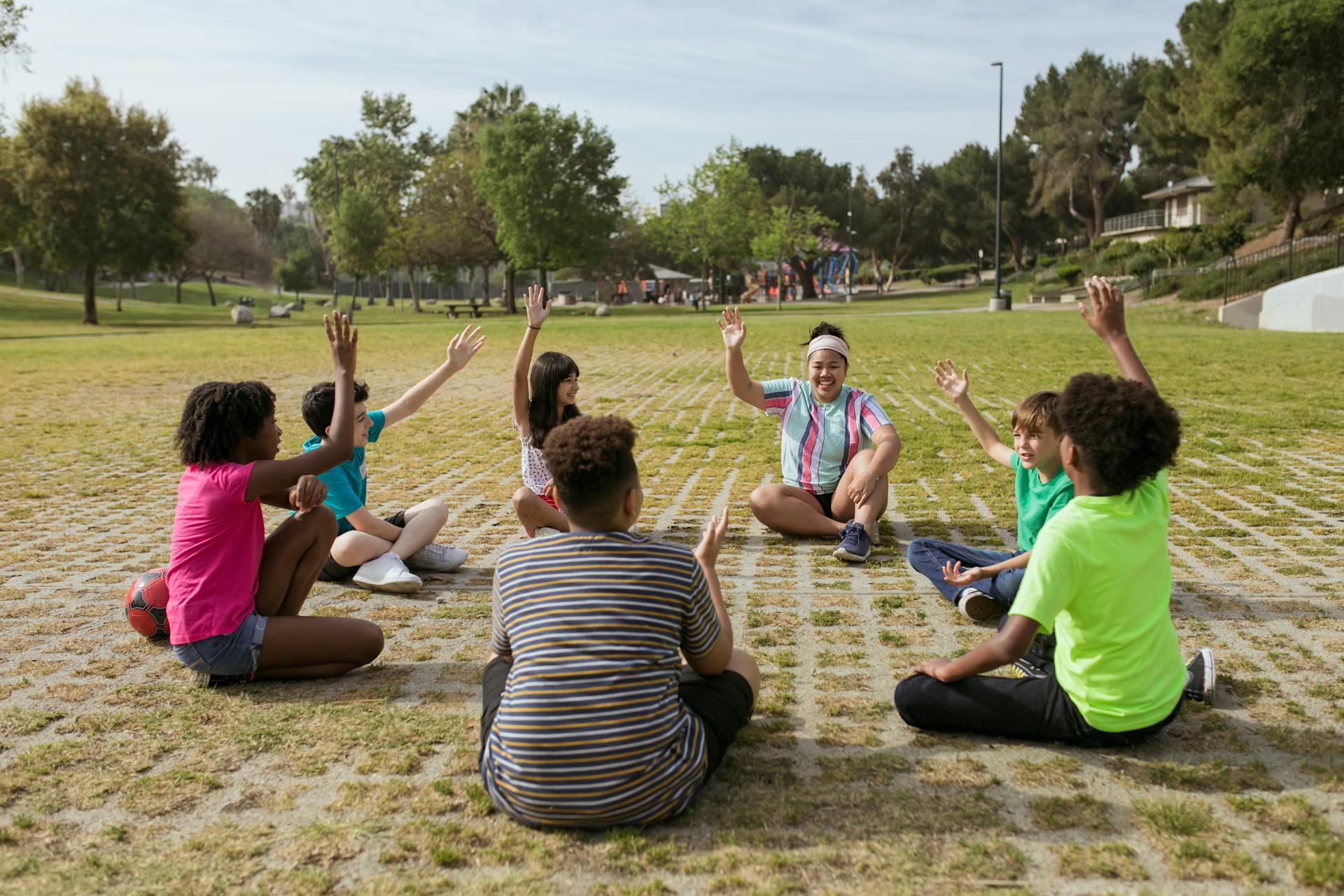
That might be why experiences like summer camps tend to come flooding back so easily. They’re set apart from daily life – different, more independent, and more intense. Days seem longer, emotions feel closer to the surface, and friendships can form quickly and deeply.
Those environments concentrate experience. The brain responds by storing more detail.
What really matters is how things resolve emotionally
Here’s a thing – memory seems less interested in whether things went well than whether they resolved emotionally.
A hard experience that ended with some kind of closure or growth can be remembered fondly. Meanwhile, a successful event that felt completely emotionally disconnected may just fade away.
Note: this text has been changed slightly for better sentence structure and simplicity, to give it a more ‘human’ feel.Kids tend to recall how situations unravelled – whether they ended up feeling safe, supported & listened to. A resolution provides a kind of closure, and it’s this that really embeds the memory.
Silence leaves its mark
A lot of lasting memories aren’t loud. In fact, they’re all the stronger because they were quiet.
You can get a lasting imprint from moments of calm – or even just solitude. Like sitting with a book, or watching how the light moves across a wall. Listening to distant sounds when you can finally focus. None of this stuff demands your attention – it just invites you to come along.
Growing up in a chaotic household, silence can feel unusually precious. That’s what gives it its power.
It’s not the importance that counts – it’s the meaning
Grownups often think kids will remember the things that, objectively, are most important – birthdays, achievements, celebrations.
But the truth is, memory is really personal & selective. Kids remember what mattered to THEM, not what’s supposed to matter.
A 5 minute conversation can stand the test of time longer than a week’s long holiday. A small kindness can easily upstage something much bigger. It’s not about size, it’s about what it means to YOU.
Some final thoughts
The memories that stick with us are the ones that hit you with something real & human. Emotion, surprise, new sensations, feeling part of something. It’s these elements all woven together that give you moments that just won’t fade away.
You don’t get to pick which memories stick – but if you understand why they do – you can appreciate them all the more when they come flooding back. & maybe when we’re making memories for kids now, we can worry a bit less about creating the ultimate experience & a bit more about making it something that really makes an impact.
Because lasting memories don’t come from things being perfect – they come from moments that felt good enough to hold onto.