




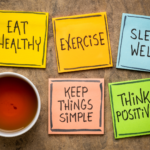



Family nutrition is often framed around single choices. Eat your vegetables. Reduce sugar intake. Drink more water. These are all good choices, but they are just the tip of the iceberg. True positive change happens when you view family nutrition as an integrated system of food, movement, sleep, stress, etc.
Systems thinking, a key component of STEM Education, allows you to look at the parts of the system and how they work together to create a cohesive whole. When viewed through a lens of systems thinking, rather than making individual decisions to improve family health, you can make long-lasting decisions to transform the entire family’s health.
Featured via Pexels
What Is Systems Thinking?
Systems thinking is a way of viewing how each element affects other elements in the system. When using systems thinking in STEM Education, this refers to how Science, Technology, Engineering, & Math intersect to solve real-world problems. When viewed through a lens of systems thinking regarding family health, this is how a skipped meal can affect a person’s energy level, which can then affect a person’s ability to be physically active, mood, and even sleep.
Rather than viewing nutrition as a simple grocery list, families can begin to see it as a larger ecosystem consisting of schedules, habits, relationships, environments, emotions, etc.
The Web of Wellness at Home
A common example of a family scenario would include a child who has difficulty concentrating in school. A typical assumption may be that the cause of this issue is due to diet-related issues, such as too much sugar consumed throughout the day, or possibly not consuming a sufficient amount of breakfast. However, there may be additional factors contributing to the child’s inability to focus in school, such as the child staying up too late, experiencing anxiety, or not having ample opportunity to engage in physical activities during the course of the day.
When viewing this situation through a systems thinking model, families will ask different questions. For instance, how is a lack of sleep influencing the child’s hunger signals? Does screen time prior to bedtime affect the child’s melatonin production? Can high stress levels lead to comfort eating or aversions to certain foods?
As families connect the dots, they cease to chase down individual problems and begin creating healthy habits that support overall wellness.
STEM Thinking Meets Family Habits
Many schools with STEM accreditation emphasize inquiry-based learning. Students learn how to ask questions, make observations, and develop hypotheses to test. Families can follow the same approach.
For example, try experiencing different evening routines to enhance the quality of sleep. Do physical activities outside before dinner change the child’s appetite or mood? Track the child’s hydration along with their energy levels. This creates a collaborative family effort towards wellness, versus providing a list of rules. As children participate in this process, they develop a sense of agency, and curiosity, about their health.
Beyond the Dinner Table
When families focus on only one area of wellness and ignore the rest of the areas, the scales get unbalanced. This is why a systems thinking approach is effective. It acknowledges the complexity of human life and accepts small, interconnected improvements.
Perhaps starting by trading screen time for a walk after dinner is the first small change. That small change could positively affect the child’s digestive system, enhance their sleep, decrease their stress, and thus potentially reduce late-night snacking. Small changes have a snowball effect.
A New Storyline for Family Health
Change is difficult for families. However, systems thinking provides a very viable alternative. It does not expect perfection. It expects awareness. Rather than addressing health issues one at a time, we can view the larger picture of the total system as living, adapting, and worthy of exploration with the entire family.
Nutrition is a dynamic relationship. Systems thinking gives us the tools to nurture that relationship daily.